While the world of hydroponics can seem technically daunting at first glance, every setup boils down to one of six fundamental architectures. Whether you are building a hydroponic garden in a closet or a greenhouse, understanding how these systems deliver water and oxygen to roots is essential for making the right choice.
As covered in our Hydroponics 101 guide, the core concept is removing soil and feeding plants directly. However, how you deliver that food defines the system. Below, we dissect the six main types of hydroponic systems, ranging from low-tech passive setups to high-performance active systems.
1. The Wick System
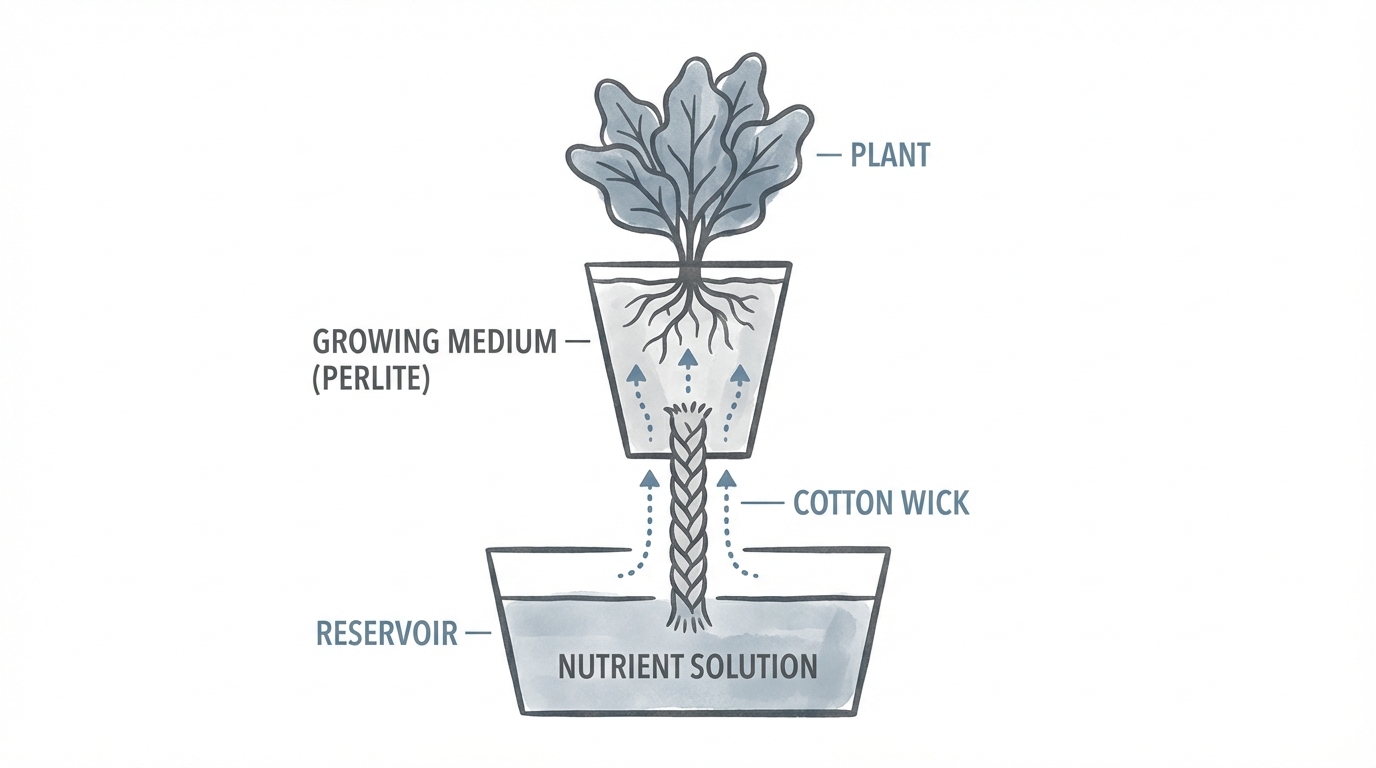
The Wick system is the simplest of all six types because it is a passive system. It has no moving parts, requires no electricity, and is entirely silent. It works on the principle of capillary action—the same way a paper towel absorbs a spill.
In this setup, the plant sits in a growing container filled with a medium (like perlite or vermiculite) located above a reservoir of nutrient solution. A wick (often made of cotton or nylon rope) connects the two, drawing liquid up to the roots.
Pros and Cons
- Pros: Extremely low cost, impossible to break (no pumps), excellent for teaching children.
- Cons: Not suitable for large plants or water-hungry crops like tomatoes, as the wick cannot supply water fast enough.
2. Deep Water Culture (DWC)
If you are looking for the sweet spot between simplicity and high performance, Deep Water Culture (DWC) is arguably the winner. It is widely considered the best active system for beginners.
In a DWC system, the plant roots are suspended directly into a nutrient-rich solution that is highly oxygenated. The plants are usually held in net pots filled with clay pebbles, while the roots dangle below into the reservoir. The secret weapon here is an air stone connected to an air pump (similar to an aquarium setup), which bubbles constantly to prevent the roots from drowning.
Because the roots have constant access to water, oxygen, and food, growth rates can be explosive. This is a popular method for those looking into DIY hydroponic setups because a simple bucket and pump are all you really need.
Pros and Cons
- Pros: Inexpensive to build, low maintenance, very fast growth.
- Cons: If the pump fails or power goes out, roots can drown quickly. The water temperature can fluctuate easily in small reservoirs.
3. Ebb and Flow (Flood and Drain)
The Ebb and Flow system is the first on this list to rely heavily on a timer. It functions exactly as the name suggests: it temporarily floods the grow tray with nutrient solution and then drains it back into the reservoir.
A submersible pump is connected to a timer. Several times a day, the timer activates the pump, filling the grow bed and soaking the roots. When the timer shuts off, gravity drains the water back down. This action pulls fresh oxygen into the root zone every time the water drains away.
This system is highly versatile and allows you to use pots filled with various grow media. It is particularly effective if you are following our guide on nutrient and pH management, as the recirculation keeps the solution mixed.

4. Nutrient Film Technique (NFT)
When you imagine a commercial hydroponic farm growing endless rows of lettuce, you are picturing the Nutrient Film Technique (NFT). This system is designed for efficiency and flow.
In NFT, a constant, shallow stream (or "film") of nutrient solution flows over the tips of the plant roots in a slightly angled channel (usually a PVC pipe or specialized tray). The solution flows by gravity back into the reservoir to be recirculated. Because only the tips of the roots are submerged, the upper parts of the root system have unlimited access to oxygen.
This is the gold standard for lightweight crops. If you check our list of the best plants to grow in hydroponics, leafy greens and herbs are the primary candidates for NFT.
Pros and Cons
- Pros: highly water efficient, uses very little growing medium, modular and scalable.
- Cons: Susceptible to pump failure (roots dry out almost instantly), channels can clog with aggressive root systems.
5. Drip Systems
Drip systems are arguably the most widely used type of hydroponics in the world, particularly in commercial settings for fruiting crops like peppers and cucumbers. It is similar to standard drip irrigation used in outdoor landscaping.
A timer controls a submersed pump, which pushes nutrient solution through a network of small tubes. Each plant has its own drip line that delivers the solution directly to the base of the stem. There are two types of drip systems:
- Recovery Systems: Excess water is collected and sent back to the reservoir (efficient, but requires pH monitoring).
- Non-Recovery Systems: Drips are precise enough that plants use everything, and there is no runoff (easier maintenance, less waste management).
6. Aeroponics
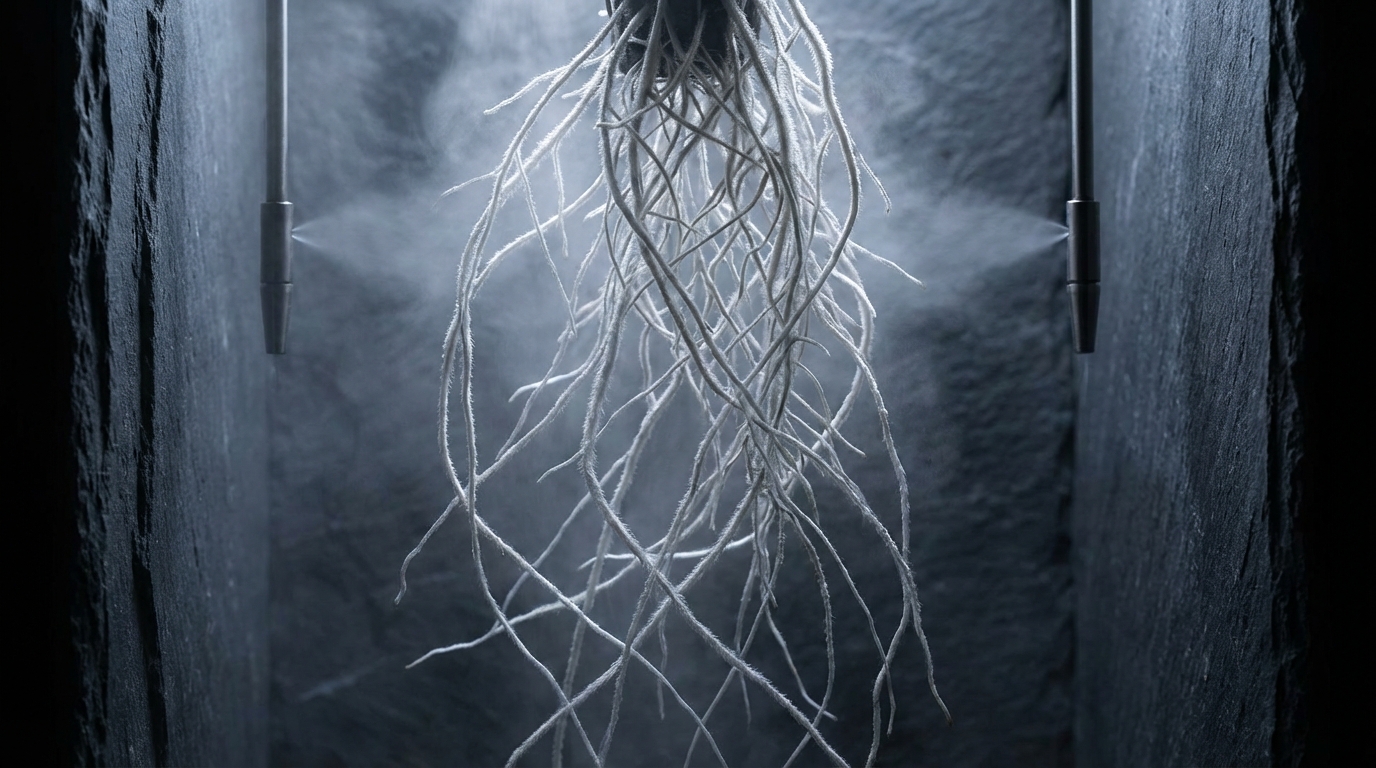
Aeroponics represents the high-tech, high-performance end of the spectrum. In these systems, plant roots hang in the air, similar to DWC, but they are not submerged in water. Instead, they are sprayed with a fine nutrient mist every few minutes.
Because the roots are exposed to the air nearly 100% of the time, they have access to the maximum amount of oxygen possible. This results in the fastest growth rates of any hydroponic system. However, it is also the most unforgiving.
Pros and Cons
- Pros: Maximum oxygen absorption, uses the least amount of water, rapid growth.
- Cons: High cost to set up, misting nozzles clog easily, technically complex. A power outage can kill plants in less than an hour.
Which System is Right for You?
Choosing the right system depends on your budget, your technical skill, and what you intend to grow.
| System | Difficulty | Best For |
|---|---|---|
| Wick | Very Easy | Herbs, Classroom demos |
| DWC | Easy/Medium | Lettuce, Basil, Peppers |
| NFT | Medium | Leafy greens |
| Ebb & Flow | Medium | Various sizes of plants |
| Aeroponics | Hard | Advanced growers |
If you are ready to start building, check out our cost analysis on DIY vs. Pre-made Kits to see how these systems price out for the home gardener.